"The Gasparilla Island Bridge Authority is a 24-hour, 365-day-a-year facility," Executive Director Kathy Banson wrote in an update the Boca Beacon published Oct. 8. She noted that the Authority tries to schedule in-lane work outside of season, but "the timing of material procurement and available funding can often dictate when a project can be completed." That timing puts the toll plaza under construction as the island fills up. The first booth to come apart was Lane 3, the unattended self-scan lane that GIBA pass holders drive through without stopping.
Most of the causeway's storm program is already finished, and much of it is out of sight under coastal rock. The last piece is happening inside the booths, and it started with the lane the island's most frequent crossers use.
What the Crews Found Inside Lane 3
The toll-system project has one goal. It moves the electronics into the interior of each tollbooth and mounts them above potential storm-surge levels. GIBA's FY2025 financial report put the cost at about $1,000,000, with work expected to begin in summer 2026. Work started in August, and once the Lane 3 booth was opened it turned out to need more than new equipment. Banson told the Beacon the crews had discovered "additional storm related damage including roof damage, attic mold, air conditioner damage and underground conduit damage." That damage was repaired before the toll-system installer arrived to fit the new waterproof boxes.
According to the Oct. 8 update and the Beacon's report on the Aug. 20 board meeting, the booths are being rebuilt one at a time in this order:
- Lane 3, the self-scan lane. Prepped in August, repaired, then fitted with storm-ready equipment.
- Lane 2. Repainted and prepped for a new air-conditioning unit. Once Lane 3 is fully working and verified, crews will strip Lane 2's interior for its own toll equipment.
- The administration building. After the booths, the hardening moves to the toll-system components there.
The operating goal is to keep two lanes working for the whole project. GIBA expects the work to run for "several months" and has told motorists to expect disruptions and possible delays.
Who Drives Through Lane 3
The self-scan lane carries a large share of the island's traffic. In a June 4 letter to the community, Banson wrote that 231,000 vehicles had used the automated self-scan lane since Jan. 1, 2026, and that many toll pass customers prefer it because it involves little human interaction. As of May 19, 2026, GIBA had about 20,000 active toll passes. Fewer than 500 of them were unlimited annual passes, which the Authority says are usually bought by private companies doing business on Boca Grande.
That means the lane being rebuilt mostly serves trip-based pass holders: full- and part-time residents, island businesses, service providers, and repeat visitors. GIBA's passes carry no residency requirement, and the only condition is that trips are used within a year. GIBA's rate sheet marks the lane cars-only. Commercial vehicles and cars pulling trailers that use it get one courtesy notice and then a $25 fee for each later violation. That rule still applies while the attended lanes are busier than usual, which matters for anyone towing a boat trailer to the north end.
What Each Pass Costs Per Trip
The annual pass is rare for a reason the price list makes clear. GIBA's toll rate sheet charges cars and golf carts $6 at full fare and $3.90 with a discount pass. Here are the account options listed on the GIBA pass site:
| Option | Price | Cost per trip | Terms |
|---|---|---|---|
| Pay at the booth | $6 per trip | $6.00 | Cash, card, Apple Pay or Google Pay |
| Non-discount car/pickup account | $60 for 10 trips | $6.00 | Plus $5 per RFID card or sticker |
| Discount car/pickup account | $97.50 for 25 trips | $3.90 | Plus $5 per RFID card or sticker; expires one year from last replenishment |
| Annual unlimited car/pickup | $780 | Depends on use | Plus $5 sticker; one sticker, one car, one year, must be affixed |
With its required $5 sticker, the annual pass costs $785 up front. At the $3.90 discount rate, that buys about 201 trips. Against the $6 booth fare, the annual pass breaks even at about 131 trips. For a household that crosses a few times a week during season, the 25-trip discount account comes out well ahead. That fits GIBA's count of fewer than 500 annual passes among about 20,000. New accounts take 24 to 48 business hours to process, and passes must be picked up in person at the GIBA administration building. Account transactions are handled in that office, not at the booth.
Guests arriving for Thanksgiving should know that the plaza does not accept SunPass, E-ZPass, LeeWay, or rental-car toll passes. It takes cash, credit cards, Apple Pay, Google Pay, and the GIBA Toll Pass, and it is open 24 hours a day.
Why the Toll Stayed at $6
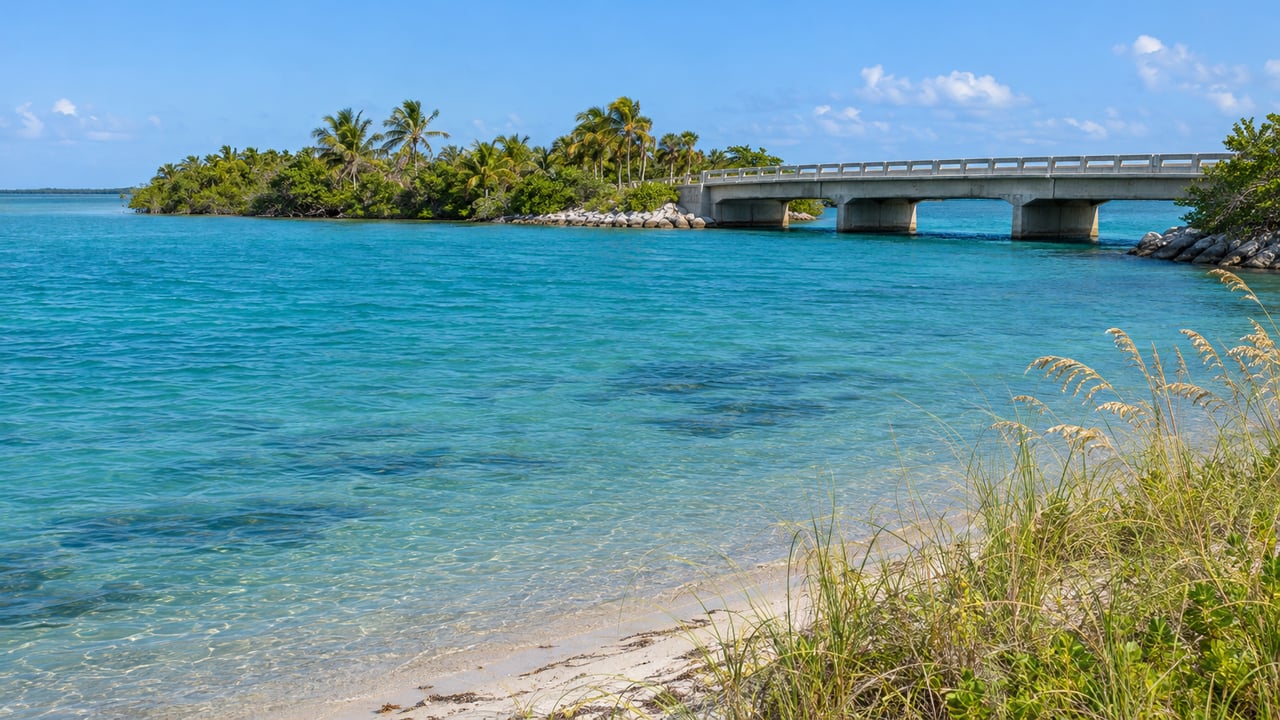
The toll-booth work is the last step of a larger program, which helps explain the flat price. In a Sept. 10 column for the Boca Beacon, Banson wrote that the 2.3-mile corridor had been armored with 7,000 square yards of marine mattress and more than 5,000 tons of coastal rock, designed for wave action and storm surge. GIBA also cleaned the causeway's drainage system above and below ground. A separate project hardened the administration building, the maintenance building, and the bridge house with hurricane-rated windows, a roll-down shutter, roof repairs, and an emergency stormwater catch basin and drain inside the bridge house. Continental Heavy Civil did the regrading for the marine mattress installation.
GIBA's FY2025 financial report dates that first armoring phase from July 2025 to its completion in December 2025, at an estimated $5,555,059. Banson's column puts combined recovery and storm-resilience spending at more than $10 million. She wrote that it was paid for with cash reserves, insurance proceeds, and FEMA reimbursements, without additional financing or toll increases. At the Aug. 20 meeting, the board approved the FY2027 budget with an emphasis on cash reserves for debt payments, storm hardening, and capital reserves. It also approved a $2 million transfer to the capital reserve investment account and the purchase of a maintenance work boat and bucket truck.
The Busiest Months Are Still Ahead
The two-lane plan has to absorb the island's biggest swing in traffic. GIBA's monthly traffic table for the fiscal year that ended Sept. 30, 2026 shows how that swing played out last season:
- November 2025: 94,696 vehicles
- December 2025: 99,866
- January 2026: 107,234
- March 2026: 130,621, the year's peak
- September 2026: 65,603, the year's low
March traffic was about double September's. Total traffic for FY2026 was 1,155,064 vehicles, down 2% from FY2025. That decline was smaller than the 4% drop the year before. If the booth work runs "several months" from its August start, it will overlap with the climb toward March.
The next phase of armoring will not compete with that traffic. Banson's column says Phase 2 is in permitting, with a start expected in 2027 or 2028. It will extend the seawall protecting the swing bridge east of the toll plaza. The FY2025 report estimated that phase at $2,500,000. It describes eventual replacement of the bridges as a future capital project, funded over time by excess cash flow placed in the Authority's investment account.
The Corridor Is for Driving Only
GIBA's position on the shoulders is firm. In the June 4 letter, the Authority says no parking is allowed along the causeway, which runs from the Placida Road traffic light to the start of the Charlotte County portion of Gasparilla Road. The letter says the road was "not intended to be a parking lot, fishing area, or picnic spot." GIBA points to possible damage to the infrastructure and to the mangroves, seagrass, and wildlife along the route.
GIBA's quarterly board meetings are public and are held at 6201 Boca Grande Causeway in Placida. The most recent was scheduled for Nov. 17, 2026, at 2 p.m. The Authority also has an open seat on its advisory board. Advisory members do not vote and serve four-year terms, according to a Boca Beacon notice from Nov. 5.
Every buyer, guest, and moving truck reaches the north end through this toll plaza. Knowing how the island's access is maintained is part of understanding what a home here is worth. If you would like a current, neighborhood-level view of your North Island property's value this season, the team at Zeke Sieglaff would be glad to prepare one, privately and with care.