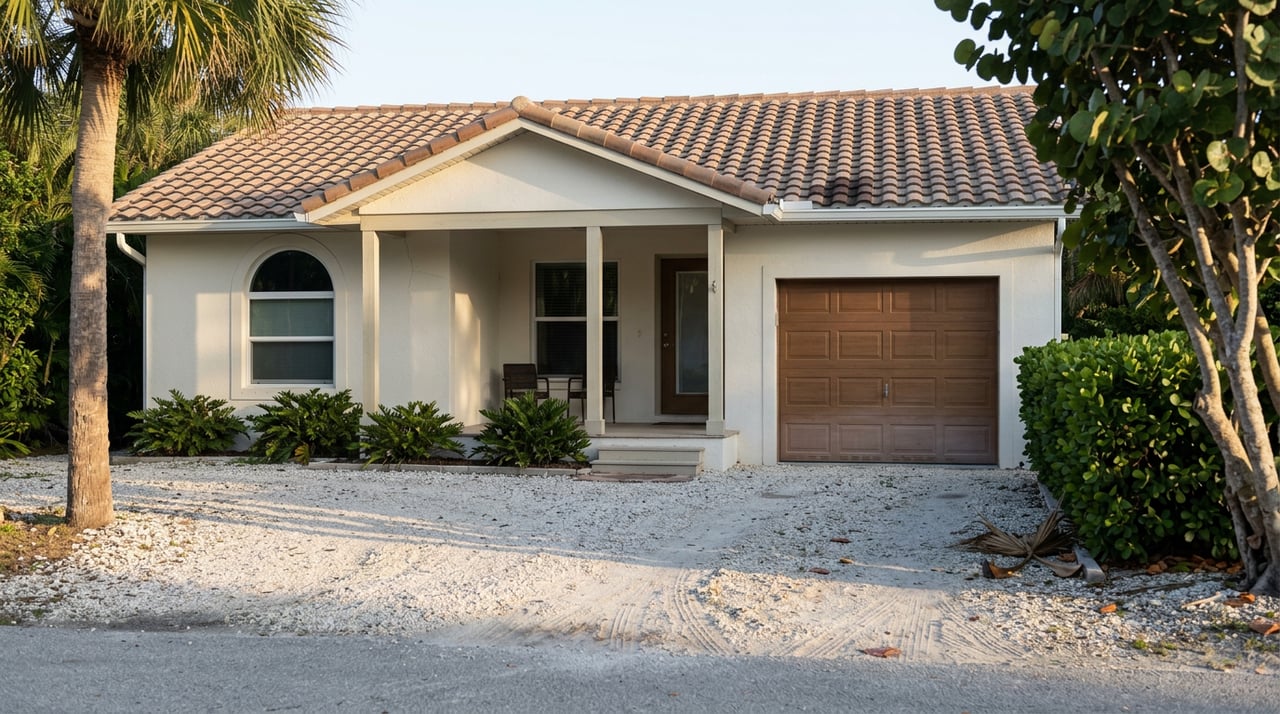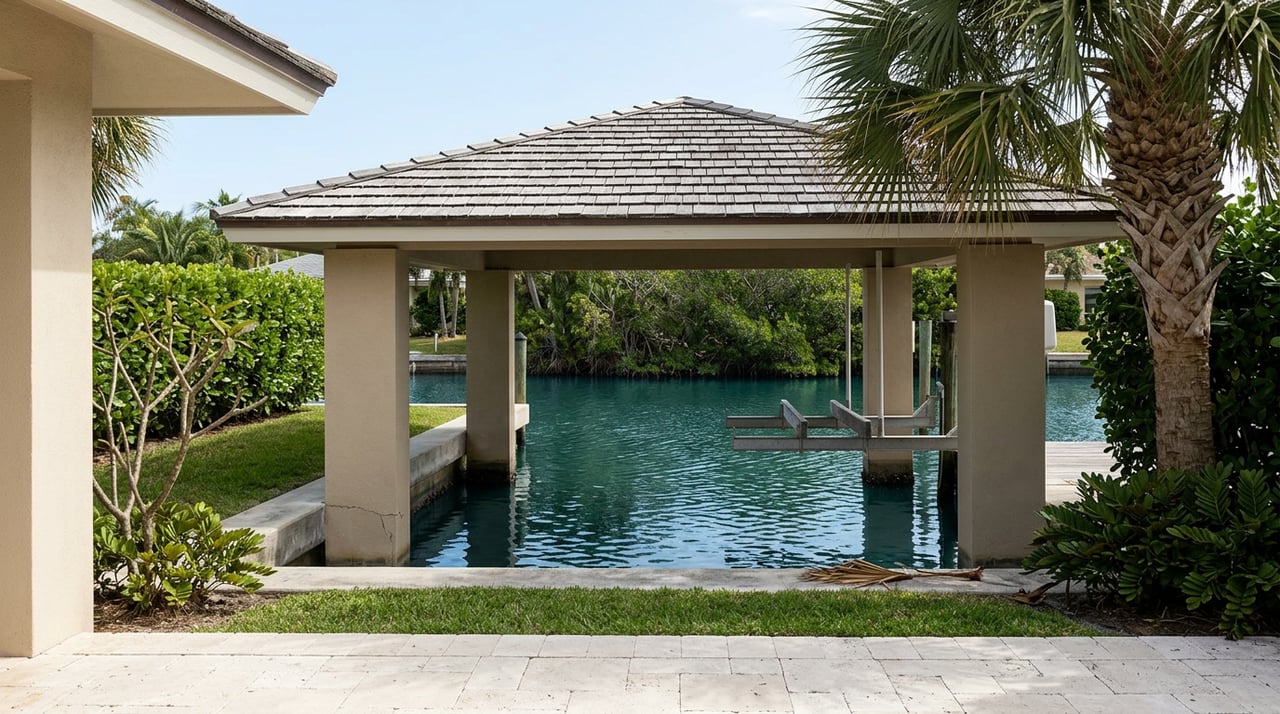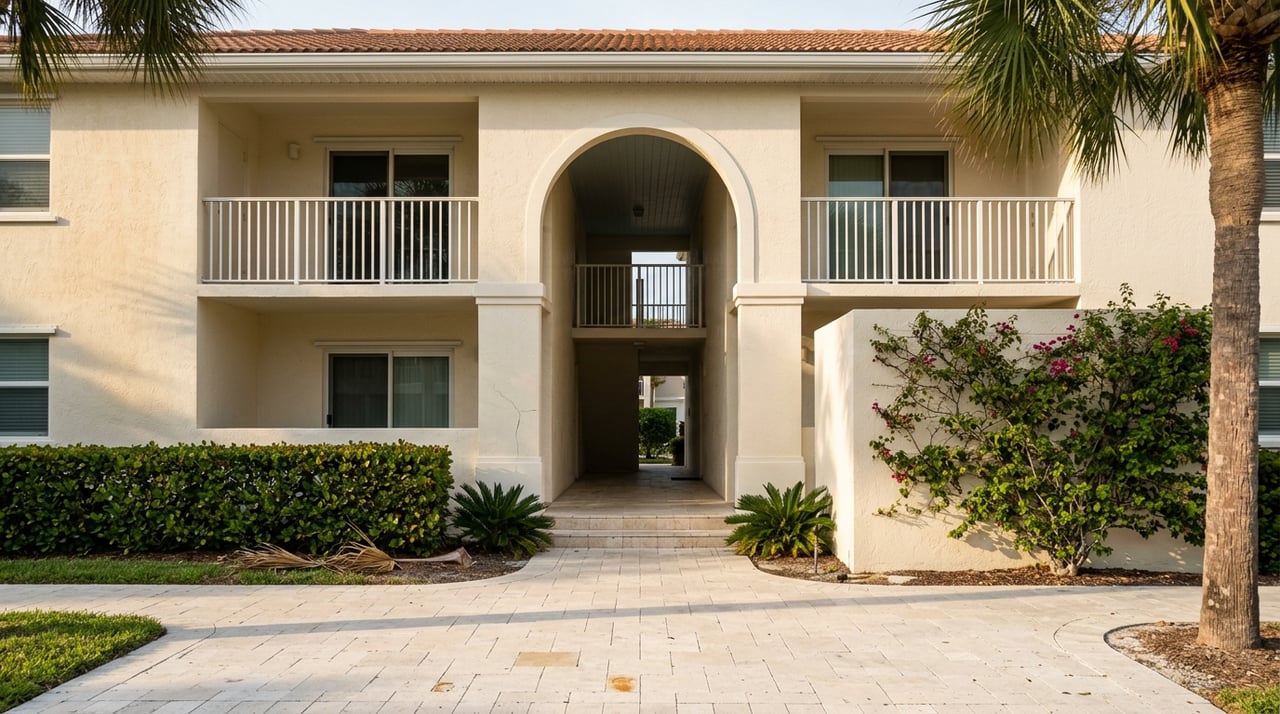
Ask anyone who has closed on a condo at the Boca Grande Club what surprised them most, and the answer is rarely the price of the unit. It is the paperwork that shows up after the price is settled. A buyer who has negotiated hard on a Gulf-front two-bedroom, agreed on financing, and cleared inspection can still find a closing table with three separate sets of governing documents on it, because a Boca Grande Club purchase is never really one transaction. It is three.
That structure is not a secret. It is written into the Club's own bylaws. But it rarely makes it into a listing sheet, and it explains more about how these condos actually trade than the asking price ever will.
Three Entities, One Deed
Every residence inside the Boca Grande Club sits under three layers of governance, and each one has a different job. Your individual condominium association maintains the building itself: the roof, the exterior walls, the common hallways. The Boca Grande Homeowners Association, known on the island as the BGHA, oversees the master infrastructure that ties the whole 65-acre property together, including roads, lighting, drainage, the beach walkovers, and the gates. Then there is the Club corporation, a distinct entity from both, which operates the clubhouse, the pools, the tennis courts, and the on-site rental program.
Three boards. Three sets of dues. Three places a special assessment can originate. When a buyer asks their agent for "the HOA documents," the honest answer at the Club is that there is no single document. There are three, and a competitive offer should account for all of them before it is written, not after.
The governance framework is spelled out in the Club's own Articles of Incorporation, Bylaws, and Rules and Regulations, which are available directly from the Club.
The Two Checks Nobody Mentions at the Showing
Ownership at the Club also carries a requirement that surprises out-of-state buyers more than any assessment: a primary Homeowner Membership in the Club is not optional. If you buy a condo inside the complex, you hold that membership as a condition of ownership, full stop. Alongside it sit other membership categories, including Social Members, Rental Members, Temporary Rental Members, Annual Family Members, and Temporary Family Members, each carrying different rights and access, all defined in the Club's Member Handbook.
Layered on top of the home price, two one-time charges commonly apply at acquisition. The first is a Club initiation fee. The second is a Capital Improvement Contribution, or CIC, which is a separate charge assessed per unit at the time of purchase rather than folded into the initiation fee. Both figures are set by the Club's Executive Committee and both can change without much notice. Recent listings have shown a genuinely wide range depending on unit and timing, which means any number a buyer sees quoted secondhand should be confirmed with Club management in writing before an offer is drafted, not assumed from a prior sale down the hall.
Here is how the fee stack actually breaks down, based on what governs the property today:
| Charge | What it covers | Who sets it |
|---|---|---|
| Club initiation fee | One-time entry fee tied to Homeowner Membership | Club Executive Committee, varies by timing |
| Capital Improvement Contribution (CIC) | One-time, separate from initiation fee, charged per unit at acquisition | Club Executive Committee |
| Condo association fee | Monthly, covers building maintenance and common elements | Individual condo association board |
| BGHA assessment | Master infrastructure: roads, lighting, drainage, walkovers, gates | BGHA board |
| Annual Club dues | Ongoing dues tied to Homeowner Membership category | Club Executive Committee |
The condo association fee is the one figure with a reliable current range. Across the Club's associations, monthly fees average roughly $2,030 and run from about $352 to $2,200 depending on the building and unit configuration. The initiation fee, the CIC, and the BGHA assessment do not have a single published number, and that absence is itself useful information: it tells a buyer these are negotiated or confirmed line items, not fixed costs baked into the MLS sheet.
Florida's newer condominium law adds one more layer worth flagging before closing. Milestone inspections and structural integrity reserve studies are now required for many condo buildings three stories or taller once they reach certain age thresholds under Florida Statute 553.899, and findings from those studies can trigger real capital work and special assessments. A buyer should ask directly whether the building has completed its milestone inspection and whether reserves are funded to the level the study recommends.
The Guest-Day Ledger
The friction that catches people off guard rarely shows up until after closing, and it involves guests rather than dues. The Club tracks a lifetime guest-day threshold for non-member visitors. Once a household's guests cross that threshold, continuing to host them requires the owner to hold a rental membership, whether or not any money changes hands for the stay. A homeowner who simply likes hosting family through the winter season can find themselves reclassified into a paying membership category they never applied for, purely because the calendar caught up with the rule.
This is not a punitive policy. It is how a private, gated club with 24-hour security and member-only amenities keeps its guest population from quietly becoming a second, unregulated rental market. But it means a buyer's real cost of ownership depends partly on how they plan to use the property with friends and extended family, not just how often they intend to rent it out formally. That is a conversation worth having with the Club's membership office before signing, not after the first holiday season.
What the Numbers Are Actually Pricing In
Here is where the governance structure stops being a compliance footnote and starts explaining the market itself. Over the trailing year through June 2026, thirteen Boca Grande Club condos changed hands on the Boca Grande MLS. The average asking price was about $1,522,000, and the average selling price came in around $1,407,385, a list-to-sold ratio of roughly 92 percent. Units took an average of 93 days to sell, at a price near $1,102 per square foot.
An eight-point gap between ask and sold, held consistently across thirteen separate transactions, is not statistical noise. It is the market pricing something the sticker price does not show. Buyers touring Club condos are not just evaluating square footage and Gulf views. They are, whether they realize it consciously or not, underwriting a three-entity governance structure, a mandatory membership with an unpublished and variable initiation cost, and a guest policy that can reclassify their household without warning. That underwriting shows up as negotiating room, and it is exactly why well-documented offers, ones built on confirmed fee schedules and specific unit comparisons rather than island-wide averages, tend to close closer to ask than offers built on assumption.
The lesson for a serious buyer is not that the Club is overpriced or underpriced. It is that the listing price has never been the whole price, and the 93-day marketing window and the 92 percent close ratio are the market's own way of saying so.
Before You Write the Offer
A few documents are worth requesting from the seller or the Club before any number goes on paper: the current Member Handbook section on membership categories and guest thresholds, a written confirmation of the current initiation fee and CIC schedule, the condo association's recent board minutes and reserve study status, and the BGHA's most recent assessment history. None of these are unusual requests. They are simply the documents that make a Boca Grande Club offer complete rather than provisional.
Frequently Asked Questions
Is the Homeowner Membership transferable if I buy from an existing owner? Membership requirements and any transfer terms are set out in the Club's Member Handbook and Bylaws, and they should be confirmed directly with Club management as part of due diligence, since terms can differ by category and by timing of purchase.
Do the condo association fee and the BGHA assessment cover the same things? No. The condo association handles the building itself, while the BGHA covers shared infrastructure across the property, including roads, lighting, drainage, the beach walkovers, and the gates. They are billed separately.
Can I rent my unit without becoming a rental member? Rental and guest access are tied to membership category and to the guest-day thresholds described in the Member Handbook. Casual, unpaid hosting can still trigger a required rental membership once the lifetime guest-day threshold is reached, so it is worth reviewing that policy before assuming informal hosting carries no membership implications.
If you are weighing a purchase at the Boca Grande Club against a village cottage, a Boca Bay condo, or a single-family home elsewhere on Gasparilla Island, the right next step is a side-by-side look at two or three specific units, fees included, not an island-wide average. The Steffan Sieglaff Team can walk you through the current fee schedule, the governing documents, and what a specific unit is really priced to convey. How much is your home worth?